Camp History
More than a century of summer life on the Chain O' Lakes.
Camp Cleghorn is one of the oldest associations on the Waupaca Chain O' Lakes. What follows is the story of how a temperance assembly became a family community — and why that heritage still shapes life at the camp today.
1881
Temperance leaders gather at Phantom Lake
A group of Good Templars — a fraternal temperance order with a strong following in Wisconsin — held an assembly at Phantom Lake near Mukwonago for study and training. Concerned about alcohol's toll on families, their purpose was broader than temperance alone: brotherhood, peace, and the welfare of children. The gathering was popular enough that it soon became an annual affair.
1897
Captain Cleghorn finds Columbia Lake
As the Phantom Lake assemblies outgrew their site, Captain John F. Cleghorn went looking for a larger, permanent home and was drawn to the Waupaca Chain O' Lakes — already known as the "Killarney of America." He settled on a 21-acre plot on Columbia Lake's south shore, owned by prominent landholder R.P. Dake. The Dayton Township tax rolls show the land, valued at $200, transferred to the Good Templars in 1897–98.
1898
The first Camp Cleghorn assembly
The first Camp Cleghorn assembly took place in 1898 on a timbered ridge above the clear, spring-fed lake, with easy access to a dozen other lakes on the Chain. Families set up tents and filled their days with rowing, canoeing, swimming, croquet, and volleyball.
1901
Tent City takes shape
The first permanent building went up in 1901 — a dining room seating 125, soon outgrown and replaced by a larger one. In these years the camp was known as "Tent City": families leased lots and lived in canvas cottages with solid floors, furniture, and divided rooms, while young women hired from around Wisconsin served meals and kept house.
Early 1900s
The Tabernacle rises
Once the Good Templars could afford it, they built a barn-shaped Tabernacle at the center of camp to hold the crowds who came for assemblies. Gas lights have given way to electric bulbs and the sandy floor to a hard surface, but the building still stands as Camp Cleghorn Chapel — the only original structure left on the property.
1910s–1920s
The Chautauqua years
Camp Cleghorn joined the national Chautauqua circuit, drawing speakers like William Jennings Bryan, "Fighting Bob" LaFollette, Dr. C.M.B. Mason, and Senator George Norris. A surviving 1922 program shows eleven days of choir, symphony, sermons, and even whistling soloists — with afternoon lectures dropped so campers could simply enjoy the lake.
1920s–1960s
From Chautauqua to Christian camping
As radio, movies, and the automobile drew audiences away from traveling Chautauqua programs, Camp Cleghorn found new life as a Christian group camp. The Tabernacle and dormitories hosted the Walther League, Girl Scouts, Boys Brigade troops, and churches like Parfreyville Methodist, which closed its doors each August so members could worship at the lake.
Mid-century
Reorganizing as a heritage nonprofit
As the assembly era faded, Camp Cleghorn's by-laws were revised: the original stock was recalled and new, non-dividend stock issued instead to those holding leased lots and cottages. Fifteen directors, elected by stockholders to three-year terms, still oversee the church, maintenance, docks, and long-range planning today.
Today
Fellowship Hall and the footpath
The old dining hall, dormitories, and camp store are gone, but the Chapel remains. A modern Fellowship Hall now hosts potlucks and reunions, a hard-surface footpath runs along most of the camp's 3,100 feet of shoreline, and Lost Lake is preserved, undeveloped, as a wetland.
Life at camp
Stories that never quite fit a timeline.
Getting to camp
Most families arrived by Soo Line Railroad to Waupaca, then transferred to a trolley that ran to King, turning around at the old Grandview Hotel. From there it was down to the dock, a dime paid, and a seat aboard the steam launch Dan D, one of Captain Justin Wood's fleet, for the ride through the Chain to Camp Cleghorn.
A small town in summer
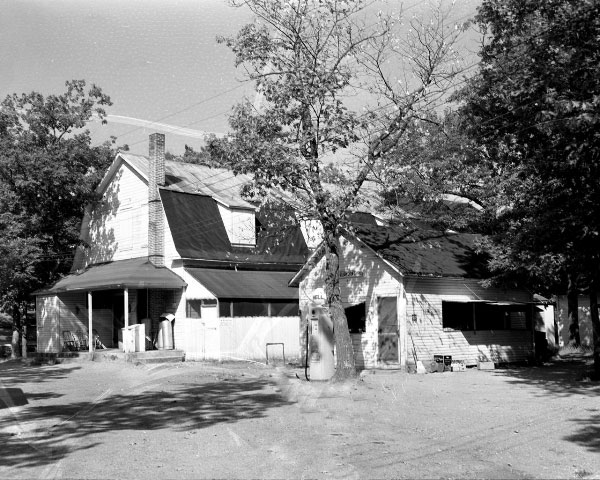
Without cars of their own, campers found most everything they needed on the grounds: rented cottage-tents, a store selling penny candy and ice cream cones, a postal window, and an ice house packed with sawdust-covered lake ice cut each winter. Even the outhouses doubled as social centers, and children liked nothing better than peering through the cracks in the boat livery floor at the dark water below.
Famous voices
As a stop on the Chautauqua circuit, Camp Cleghorn hosted traveling speakers as well known as William Jennings Bryan, "Fighting Bob" LaFollette, Dr. C.M.B. Mason, and Senator George Norris, who kept a Chain O' Lakes cottage and is credited with securing postal delivery by boat. A surviving 1922 program packed eleven days with a trained choir, a symphony concert, and whistling soloists — with afternoon lectures dropped so campers could enjoy the lake.
The first cottages
Tent City gave way to permanent cottages when Captain Wood built "Killarney," the first, followed by a converted fishing shack called "Kamp Kosy." Rev. Rufus Colby soon added "Bide-a-Wee," where residents read by kerosene lamp and hauled water from a hand pump. Families from those early cottages are now in their sixth generation at the camp.
"This is my favorite place to be." — Jim Colby, returning each summer to his family's cottage
What has stayed the same
The principles that founded the camp still shape it today.
- — Family Christian living and summer worship as a community anchor
- — Temperance in avoiding drug and alcohol abuse; alcohol is restricted to cottage premises
- — Stewardship of the natural resources entrusted to the camp, including the Lost Lake preserve
- — Organized as a nonprofit — not for profit, but for heritage